Hubble finds clues to a planet formed after its star died
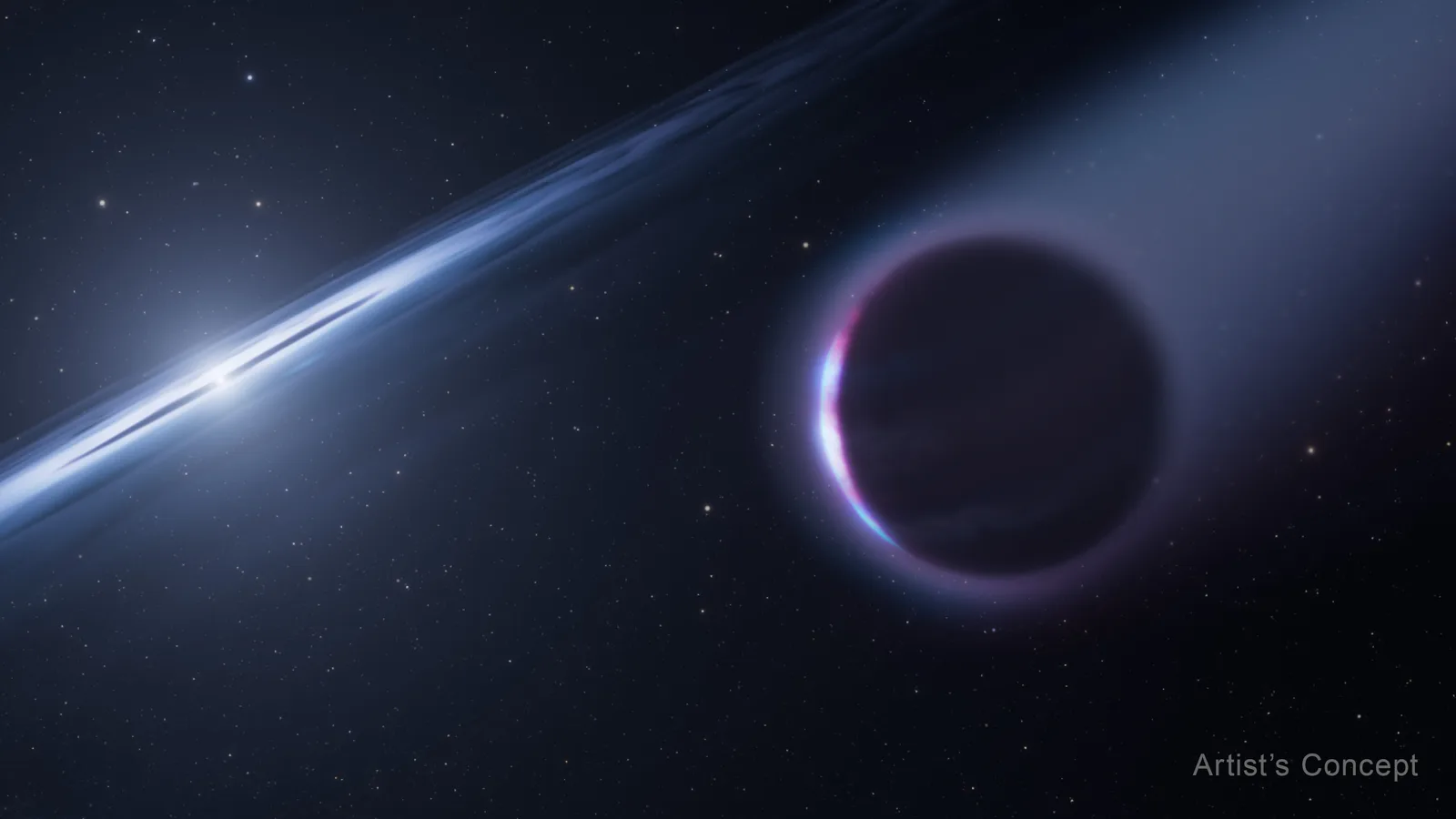
A star's discarded material may have become the building blocks of a new planet. Hubble observations of HS 0209+0832 have revealed chemical clues to a gas giant that could have formed after its host star shed its outer layers.
The candidate is described in a study published October 5 in Nature Astronomy. Planets usually form alongside their stars.
The clue is in the atmosphere of the stellar remnant. Researchers found an unusual abundance of zinc, copper and niobium, with little silicon and iron. They interpret that chemical mixture as evidence that the star is gathering material from a second-generation planet candidate.
The finding emerged from a fresh look at old observations. Hubble data recorded in 1999 contained unidentified features in the star's spectrum—the pattern of light used to identify chemical elements. Reanalysis identified niobium, which also appeared in data from the retired Far Ultraviolet Spectroscopic Explorer, or FUSE.
ESA/Hubble describes the possible planet as a gas giant around Jupiter's size that could be losing its atmosphere. Escaping gas would supply the material detected around the white dwarf.
There is another clue in the system's light. NASA's TESS satellite detected a brightness cycle of 4.399 ± 0.026 days. The paper offers two explanations: changing emission from the planet's day and night sides, or a tail of gas escaping from an evaporating planet.
The authors also consider another origin: an older planetary core that acquired a new atmosphere from the star's expelled material.
Disclosure: Newsah's editorial process uses OpenAI's Codex models.
Sources
- Nature AstronomyPrimary source
- ESA/HubblePrimary source
- Live ScienceSecondary
Comments
No comments yet. Be the first.