Platypus-like Jurassic fossil holds clues to mammal feeding
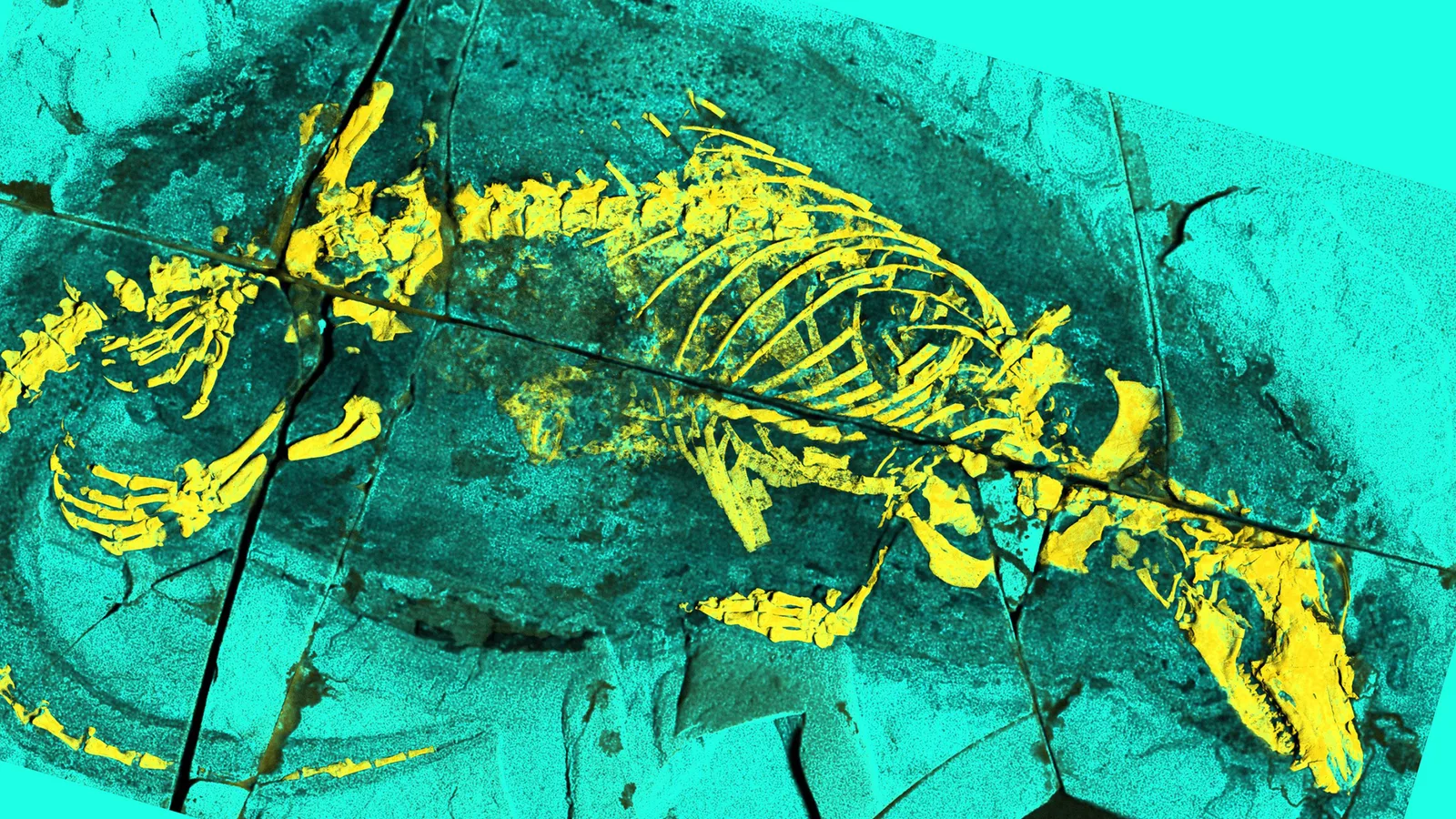
A Jurassic mammal relative with a platypus-like pelvis and an otter-like tail offers clues to how the anatomy behind mammalian swallowing and suckling evolved.
The newly described Megacauda sungei lived in what is now Inner Mongolia, China, around 168–163 million years ago. It belonged to Docodonta, an extinct branch of early mammal relatives, and weighed an estimated 1–2 kilograms, according to ABC Science’s account of the research. The study appeared in Nature on October 7.
High-resolution microCT scans revealed an unusual combination of skeletal features, including blade-like cheek teeth. Its pelvis and tail point to a life spent partly in water, according to Ohio University, whose researcher Peishu Li coauthored the study.
Inside the mouth, the team identified small bony projections on the roof and specialized hyoid bones in the throat. These structures suggest that the anatomy needed for mammal-like swallowing and suckling had begun evolving by the Middle Jurassic.
Suzanne Hand, a paleontologist who was not involved in the study, told ABC that the animal’s anatomy had parallels with the platypus. Examining the microscopic structure of its limb bones could help establish how much time it spent in water.
Sources
- Ohio UniversityPrimary source
- ABC ScienceSecondary
- Nature PortfolioPrimary source
Comments
No comments yet. Be the first.